



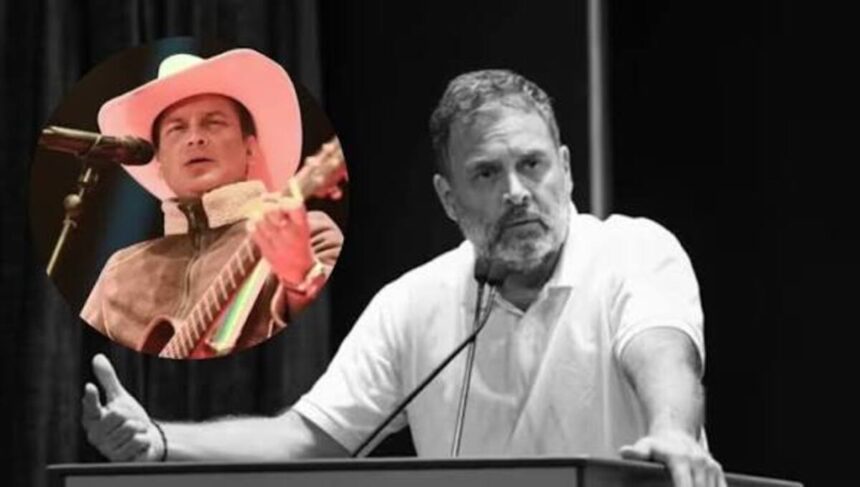
The Indus Zone Tech Desk | Guwahati, October 17, 2025 | Rahul Gandhi Pays Emotional Tribute to Zubeen Garg in Guwahati.
In a deeply emotional moment for the people of Assam, Congress MP Rahul Gandhi visited the home of late singer Zubeen Garg in Guwahati to pay his last respects. The beloved artist, often called the “voice of Assam,” passed away recently in Singapore, leaving behind a legacy that transcends music, language, and borders.
During his visit, Gandhi offered condolences to the grieving family and interacted with reporters, calling for a transparent investigation into the circumstances surrounding the singer’s death. His words struck a chord with fans still coming to terms with the loss of one of Northeast India’s most cherished cultural icons.
“Assam’s Kanchenjunga”: Rahul Gandhi’s Poetic Tribute
Addressing the media outside Zubeen’s residence, Rahul Gandhi described the singer as “Assam’s Kanchenjunga,” comparing his personality and achievements to the majestic mountain.
“It’s very sad for me to come here under these circumstances. I would have liked to visit under happier conditions,” Gandhi said, visibly moved. “When I think of Zubeen, I think of Kanchenjunga — honest, transparent, unshakable, and beautiful. That’s what he represented to the people of Assam and India.”
Drawing a personal connection, Gandhi reminisced about his own mountaineering days in Sikkim, explaining that Zubeen Garg’s artistic depth reminded him of the serene strength of the Himalayas.
Remembering Zubeen Garg’s Humility and Legacy
Rahul Gandhi emphasized that Zubeen’s greatness was not just defined by his stardom but also by his humility and compassion.
“You can see the worth of a person in their home. Zubeen had fame, wealth, and talent — yet he remained grounded and kind,” Gandhi noted.
He praised the Garg family for nurturing his creative spirit and enabling him to become the musical voice of Assam, blending modern rhythms with folk influences that celebrated the region’s diversity.
Zubeen Garg was more than just a playback singer — he was a composer, lyricist, actor, and social activist who used his platform to highlight issues affecting Assam and the Northeast. Over his decades-long career, he recorded songs in multiple languages including Assamese, Bengali, Hindi, and Nepali, and earned national recognition for his versatility.
Call for a Transparent Investigation into Zubeen Garg’s Death
Rahul Gandhi’s visit also carried a strong political and moral message. He stressed that the family and the people of Assam deserve complete clarity about the events that led to Zubeen Garg’s death in Singapore.
“The family has lost Zubeen and all they want is the truth. The people of Assam want closure,” Gandhi said.
He appealed to the government to conduct a swift and impartial inquiry, adding that transparency would be the greatest tribute to the artist’s memory. Gandhi reiterated that the Congress party stands firmly with the family and will support every effort to uncover the truth.
His comments come days after the Assam government formed a one-man judicial commission to probe the incident and examine whether any lapses occurred during Zubeen’s treatment abroad.
Grief Across Assam and the Nation
The sudden passing of Zubeen Garg has sent shockwaves through Assam and beyond. Candlelight vigils, musical tributes, and public gatherings have been held across towns such as Dibrugarh, Jorhat, and Tezpur. Fans have flooded social media with memories of his songs — from soulful tracks like Ya Ali and O Bideshi Bondhu to regional classics that defined Assamese pop culture.
Local artists described Zubeen as “the heartbeat of Assamese music,” noting that he inspired generations of musicians and gave Assamese cinema a distinctive identity. His ability to bridge the cultural gap between the Northeast and mainstream India made him an icon for inclusivity and artistic freedom.
Rahul Gandhi’s Message to the People of Assam
Concluding his address in Guwahati, Rahul Gandhi extended heartfelt condolences to the people of Assam, urging unity and empathy during this difficult time.
“We love Zubeen Garg, we want to honour him, but first we want transparency and justice. What happened in Singapore — everyone in Assam has a right to know,” he said.
Gandhi added that Zubeen’s artistic vision reflected the true spirit of the Northeast — strong, diverse, and deeply rooted in culture. “He was not just a singer; he was the sound of Assam’s soul,” Gandhi remarked.
Zubeen Garg’s Enduring Influence
Even in his absence, Zubeen’s influence continues to shape Assam’s identity. His songs are played at festivals, protests, and family gatherings alike — serving as a reminder of his emotional connection with the people.
Cultural scholars in Guwahati have called for the creation of a Zubeen Garg Memorial Music Institute to nurture young talent and preserve his work. Several student organizations have also urged the state government to declare his birthday as Assam Music Day to honour his lifelong contribution to the region’s art and culture.
Conclusion
Rahul Gandhi’s visit to Zubeen Garg’s home was not just a gesture of condolence but a reflection of how deeply the singer’s art touched lives across India. His description of Zubeen as “Assam’s Kanchenjunga” perfectly encapsulated the artist’s towering presence — majestic, grounded, and timeless.
As investigations continue, the demand for truth and transparency grows stronger. Yet amid the sorrow, Zubeen’s melodies continue to echo — a lasting symbol of love, unity, and pride for Assam.