



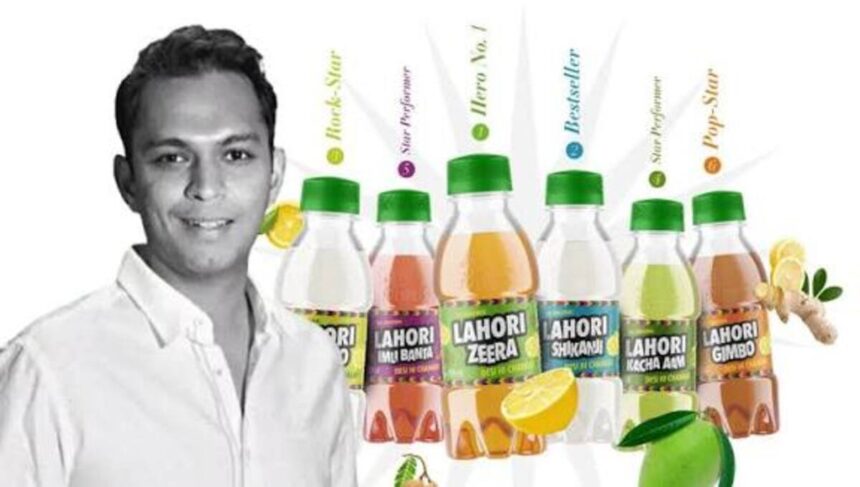
The Indus Zone Tech Desk | Lahori Zeera | The Punjab-Born Brand Shaking Up India’s ₹800 Cr Ethnic Beverage Market. From a humble startup by three brothers in Punjab to a ₹530 Cr beverage powerhouse, Lahori Zeera is redefining India’s ethnic drinks market with innovation, affordability, and local flavour. Here’s how the brand plans to hit ₹800 Cr revenue in FY26.
The Rise of Lahori Zeera: India’s Homegrown Fizz Revolution
In a world where global cola brands dominate billboards and store shelves, one Indian brand is quietly rewriting the rules of refreshment. Lahori Zeera, a creation of three entrepreneurial brothers from Punjab, has turned traditional Indian spices into a nationwide craze.
At a time when consumers are shifting from sugary colas to healthier, authentic Indian beverages, Lahori Zeera has emerged as a powerful player in India’s ₹32,000 crore non-alcoholic drinks industry. Its unique blend of natural ingredients, local flavours, and affordable pricing has struck a chord with India’s masses and youth alike.
Founded in 2017, Lahori began with a simple yet powerful idea — to bring ethnic Indian drinks like jeera soda, nimbu shikanji, and kaccha aam into hygienic, modern packaging that could compete with western colas.
“We saw ethnic Indian drinks being underrated and unorganized. Our goal was to elevate them — to make local flavours aspirational again,” said Nikhil Doda, co-founder of Lahori Zeera.
The Spark Behind Lahori’s Origin
In the early days, finding an Indian beverage that combined hygiene, taste, and tradition was nearly impossible. While drinks like jaljeera and shikanji were popular in homes and roadside stalls, they lacked modern branding and consistent quality.
That’s when the Doda brothers decided to bridge the gap. Using a family recipe and a deep understanding of Indian palate preferences, they created Lahori Zeera — a drink that captured the nostalgia of Indian summers but with a modern twist of fizz and freshness.
When TikTok and global beverage ads dominated Indian screens, Lahori quietly built its story in the lanes of Chandigarh, Panchkula, and Ludhiana, one bottle at a time.
By 2020, Lahori had achieved ₹83 crore in revenue, entirely self-funded. But after the pandemic, things exploded — Indians began searching for natural, immunity-boosting ingredients such as turmeric, jeera, ginger, and tulsi. Lahori’s timing couldn’t have been better.
Within two years, its revenue shot to ₹212 crore, and by FY25, the brand closed with an impressive ₹530 crore topline.
Cracking the Distribution Code: Lahori’s Reverse Strategy
Unlike most FMCG startups that chase distributors first, Lahori started directly with retailers — a bold reversal of the standard playbook.
During its early experiments, the founders made trial batches at home and took them to Chandigarh retailers. Instead of pitching bulk orders, they convinced shop owners to test with just ₹200 worth of product.
The approach worked brilliantly. As bottles started flying off shelves, repeat orders multiplied, and word-of-mouth buzz began spreading across North India.
Soon, the same distributors who had once refused to stock Lahori came knocking, realizing that consumer demand was already built in.
“Our goal was simple — create pull from the ground up. Once retailers trusted the product, distributors followed naturally,” Doda recalled.
This grassroots-first approach built a strong foundation in North Indian markets before Lahori expanded west and south.
Bootstrapped Growth and a Turning Point with Verlinvest
The beverage industry is notoriously capital-intensive — requiring expensive machinery, bottling plants, and logistics networks. Yet Lahori remained bootstrapped for nearly five years, reinvesting every rupee back into growth.
But by 2021, the demand had far outpaced supply. Bottles were flying off shelves faster than they could be produced. That’s when a chance encounter changed everything.
An investment manager in Chandigarh noticed Lahori’s bottles selling briskly and connected the founders with Belgium-based private equity firm Verlinvest, an investor with experience in consumer brands like Oatly and Epigamia.
After months of due diligence, Verlinvest was convinced of Lahori’s potential and invested $15 million for a minority stake.
This marked Lahori’s first external funding and a major inflection point. The startup transitioned from a founder-led hustle into a professionally managed enterprise, hiring auditors, setting up a second management layer, and streamlining operations.
Ironically, just before the funds arrived, a GST hike from 12% to 40% on carbonated fruit beverages threatened to derail operations. But Lahori navigated the shock through lean operations and a focus on cost efficiency — proving the resilience of its business model.
Scaling Smart: Lahori’s Multi-Plant Expansion
Even as Lahori’s brand grew rapidly, manufacturing constraints remained a bottleneck. To overcome this, the company adopted a hybrid production strategy — building company-owned plants while partnering with co-bottlers across India.
Its first plant near Chandigarh laid the groundwork for North Indian operations.
A second facility in Gujarat soon followed, giving Lahori direct access to Western markets like Mumbai, Pune, and Ahmedabad.
Now, a third plant in Lucknow is slated to go live, complemented by six co-bottling partners located every 300–400 km for localized production.
This decentralized model enables Lahori to produce closer to its consumers, keeping products fresh and logistics costs low — a key advantage over multinational rivals.
“Beverages need proximity,” said Doda. “We realized that having many smaller facilities across regions works better than relying on a few large ones.”
Inside Lahori’s Business Blueprint
Lahori currently produces nearly 5 million bottles daily, and with new plants and co-bottlers online, that capacity will soon double to 10 million bottles per day by March next year.
This surge aligns with Lahori’s expansion into Andhra Pradesh and Telangana, two untapped states with growing youth populations and demand for regional beverages.
Internationally, the company has already drawn attention from Saudi Arabia and the UAE, where Indian flavours like jeera and nimbu shikanji resonate with the local diaspora. The brand plans to enter Gulf markets within the next two years, making the UAE its first overseas hub.
In 2025, Lahori raised another ₹200 crore from Motilal Oswal Private Equity, focusing on Southern expansion and competing with regional players like Megha Fruit Processing’s “Bindu Jeera.”
With these new funds, Lahori is not only expanding capacity but also investing in AI-driven demand forecasting and data-led distribution optimization — ensuring no region runs dry during peak summer.
The 10 Magic: Lahori’s Pricing Strategy
Lahori’s genius lies in its ₹10 price point, a move that democratized access to quality beverages.
Much like Parle’s ₹5 biscuits or single-use shampoo sachets, Lahori’s pricing makes its drinks an impulse buy for everyone — from rural laborers to urban youth.
While Coca-Cola and Pepsi’s smallest SKUs begin around ₹20, Lahori delivers double the flavour at half the price, making it both affordable and aspirational.
Its product lineup now includes Masala Jeera, Nimbu Shikanji, Kaccha Aam, and Mango Twist, with seasonal variants planned for next summer. This strategy not only attracts diverse palates but also ensures repeat purchases across demographics.
Funding, Growth & The Road Ahead
From zero to ₹530 crore in FY25 revenue, Lahori’s climb has been staggering. With the new round of funding and capacity expansion, the company is targeting ₹800 crore by FY26, reflecting nearly 50% year-on-year growth.
Lahori is also betting big on AI and consumer engagement. A new initiative will enable customers to scan QR codes and learn about drink ingredients, local bottlers, and even get personalized recommendations — blending tech with tradition.
Moreover, the brand is expanding into regional languages like Tamil, Telugu, Bangla, and Malayalam for marketing and packaging — a crucial move for deeper market penetration.
“Our mission is simple — to make Indian beverages mainstream, accessible, and respected globally,” Doda said. “We’re not just selling drinks; we’re selling a slice of Indian identity.”
Competing Against Giants: The Real Test
The road ahead won’t be easy. With global giants like Coca-Cola, Pepsi, and Dabur eyeing the ethnic beverage space, competition will intensify. But Lahori’s agility, price strategy, and authentic brand story give it an edge.
Experts believe that India’s ethnic beverage category will expand at a CAGR of 15–18% over the next five years, making it a multi-billion-rupee opportunity. Lahori’s challenge will be to scale without diluting the authenticity that made it popular.
Conclusion: The Desi Brand That Bottled the Indian Soul
In a country as diverse as India, few brands manage to capture the nation’s flavours, affordability, and entrepreneurial grit in one bottle. Lahori Zeera has done just that — taking India’s age-old spice drinks and turning them into a modern FMCG powerhouse.
From three brothers experimenting in a kitchen to building a national brand valued in hundreds of crores, Lahori’s story is not just about business — it’s about believing in India’s cultural and culinary strength.
As the company races toward its ₹800 crore milestone, one thing is clear — the fizz in Lahori’s bottle isn’t just carbonation; it’s the spirit of Indian innovation bubbling to the top.