



The Indus Zone Tech Desk | Seekho’s Remarkable Comeback: From a Cash Crisis to a 600 Crore Edtech Powerhouse. Discover how Seekho, founded by IIT Kanpur alumni, overcame funding challenges and redefined learning through short, skill-based videos. From near bankruptcy to ₹600 Cr in revenue — here’s the inspiring story of India’s fastest-growing edutainment platform.
The Birth of a Revolution: Seekho’s Vision for Smarter Learning
In a world addicted to endless scrolling and short-lived entertainment, three IIT Kanpur graduates dared to build something different — a digital platform where every swipe means learning something new. Their idea was simple yet radical: blend the addictive format of short videos with the purpose of education and self-improvement.
This idea gave birth to Seekho, a fast-growing Indian edutainment startup that has now evolved into a ₹600 crore powerhouse with over 2 million paid users and ₹50 crore in monthly revenue.
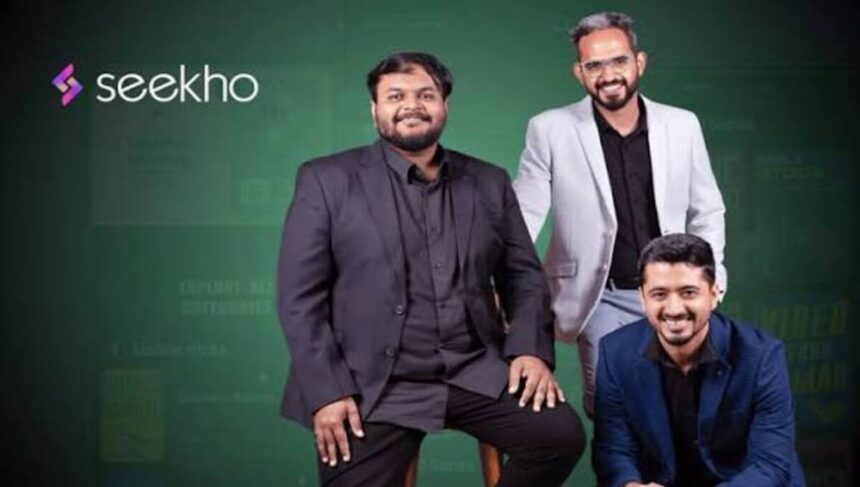
Founded by Rohit Choudhary, Yash Banwani, and Keertay Agarwal, Seekho began as a side project during the chaotic aftermath of the TikTok ban in 2020. But unlike the flood of new entertainment apps that followed, Seekho’s goal was different — it wanted to help Indians learn while they scroll.
“During the pandemic, we wondered — what if Indians could scroll for something meaningful rather than mindless content?” recalls Choudhary, the CEO and cofounder of Seekho.
That single question reshaped their lives — and soon, millions of others.
The Early Struggles: From Empty Wallets to Big Dreams
When the trio launched Seekho, India’s short-video landscape was flooded with clones like Moj, Josh, and Chingari, all competing for attention. Yet, while others chased viral dance trends and comedy clips, Seekho focused on something deeper — learning that could change lives.
In 2021, the team was small, cash-strapped, and juggling full-time jobs at Kuku FM, their previous employer. Their early users were few, their content creators unpaid, and the idea of building an edtech startup in the middle of an economic slowdown seemed insane.
“By mid-2022, we had barely a month’s runway left. We were paying creators out of our own savings and had no revenue,” said Choudhary.
It was a do-or-die moment. The founders decided to introduce a subscription paywall, priced modestly at ₹199 a year — a last-ditch effort to stay afloat.
That decision changed everything. Within weeks, users began subscribing, generating ₹4 lakh in their first month. It was not much, but it was enough to prove that people were willing to pay for purposeful learning.
The Turning Point: A Business Model That Worked
The early success of paid subscriptions caught investor attention. With proof of concept in hand, the founders approached Elevation Capital, which invested $3 million in Seekho’s next growth phase.
This funding allowed Seekho to:
Expand its creator network
Build analytics tools for content performance
Introduce short, value-packed videos under five minutes
Focus on skill development categories like public speaking, finance, career hacks, and life skills
“We didn’t want to chase virality like other platforms. If a video adds value, users will watch it,” said Choudhary.
To empower creators, Seekho offered stable monthly incomes rather than tying pay to views. This encouraged educators and professionals to join and produce consistent, high-quality content.
By mid-2023, Seekho had crossed 50,000 paid users and was generating ₹30 lakh per month, marking the beginning of its true scaling phase.
Building India’s Edutainment Ecosystem
Seekho was not just another short-video app; it became an ecosystem for everyday learning. The founders realized that India’s aspirational middle class—especially those earning under ₹50,000 a month—wanted practical skills that could help them earn more and grow faster.
That insight shaped Seekho’s unique content strategy:
Quick, actionable videos on real-world topics
Multi-language support, making learning accessible beyond English speakers
Engaging creator shows, blending entertainment and education
Their decision to keep videos short — typically under five minutes — tapped into India’s growing mobile-first audience, accustomed to consuming knowledge in bite-sized bursts.
By late 2023, the founders had expanded into new content categories like business growth, personal finance, astrology, and career guidance. These topics struck a chord with Tier-II and Tier-III audiences who were looking for accessible and affordable learning.
Scaling Up: From 50K Users to 2 Million Subscribers
With fresh funding from Lightspeed and Elevation Capital (worth another $8 million), Seekho accelerated growth.
Their product team introduced AI-driven recommendations, allowing users to discover content that matched their interests — similar to Netflix’s personalization model.
Seekho also revamped its UI/UX, launched a creator analytics dashboard, and rolled out a premium plan at ₹599 per year.
This upgrade helped:
Boost user engagement by 3x
Increase average watch time per session
Improve content discoverability
By March 2025, Seekho had reached 2 million paid subscribers, and annual revenue soared to ₹150 crore, growing 13x year-over-year.
Losses, at ₹17 crore, were modest considering the scale and speed of expansion.
The 600 Crore Vision: What’s Next for Seekho
After multiple funding rounds, Seekho raised $28 million in fresh capital from Bessemer Venture Partners, Goodwater Capital, and existing backers. The company’s next goal is clear — cross ₹600 crore in revenue by FY26.
To achieve this, the founders are betting big on:
- AI Integration – Building intelligent learning assistants that let users ask questions and get AI-generated answers in real time.
- Regional Expansion – Introducing content in Tamil, Telugu, Bengali, and Malayalam to reach India’s next 100 million learners.
- New Categories – Adding agriculture, wellness, and creative arts to expand beyond traditional upskilling.
- Creator Empowerment – Offering better monetization tools and training programs for educators and experts.
Seekho is also exploring international markets, starting with Southeast Asia, where short-form learning content is rapidly gaining traction.
The Seekho Formula: Why It Worked
Unlike many failed short-video clones that rose after TikTok’s ban, Seekho’s success lies in focus, consistency, and authenticity.
Here’s what made the difference:
Purpose over popularity: Seekho prioritised real learning over viral trends.
Community-driven creators: It built a sustainable creator ecosystem instead of relying on influencer hype.
Localized learning: It focused on India’s regional diversity and everyday relevance.
Affordable monetization: Its low-cost subscription model attracted students and young professionals.
Continuous innovation: AI, analytics, and recommendation engines kept users engaged longer.
These pillars transformed Seekho into India’s leading edutainment brand, inspiring users to replace mindless scrolling with meaningful discovery.
The Bigger Picture: Redefining How India Learns
Seekho’s rise reflects a larger shift in how Indians approach learning. As data becomes cheaper and smartphones more accessible, learning habits are evolving.
Instead of traditional long-form courses, micro-learning through short videos is gaining momentum — faster, relatable, and easier to digest.
Seekho is tapping into this transformation by merging education, entertainment, and community — what the founders call “Edutainment 2.0”.
Their mission? To make every minute spent online a minute of growth.
“We don’t want to compete with Netflix or YouTube,” says Agarwal. “We want to build a habit of curiosity — learning that’s fun, relatable, and rewarding.”
Conclusion: The Seekho Legacy in the Making
From scraping free content on weekends to building a platform valued in the hundreds of crores, the story of Seekho’s founders is one of resilience and reinvention.
They were rejected by over 100 investors, faced near-bankruptcy, and yet chose to believe in their mission — that learning should be simple, engaging, and universal.
Today, Seekho stands not just as a business success but as a symbol of India’s digital learning revolution. It’s a reminder that in a world drowning in entertainment, knowledge can still be powerful — and profitable.