



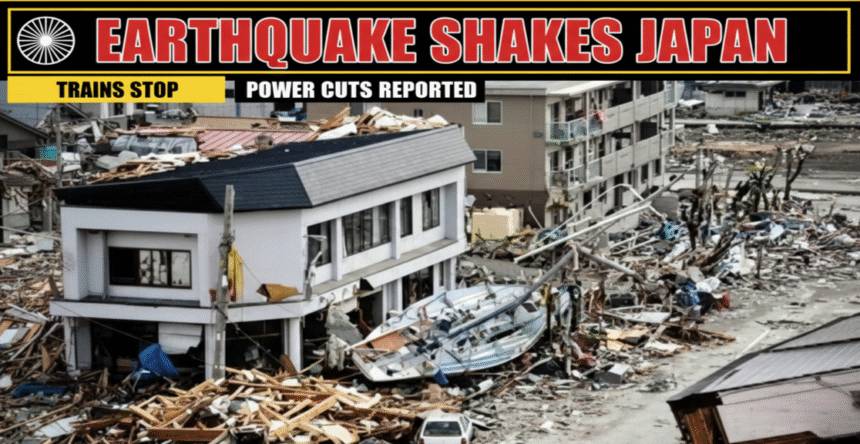
Tokyo, November 9, 2025 | The Indus Zone Tech Desk | Earthquake Shakes Japan
A series of earthquakes shook parts of northeastern Japan on Saturday, leading to short power cuts and delays in bullet train services. According to local media, the tremors were strong enough to cause concern but not powerful enough to cause major damage. Authorities have asked people to stay alert for possible aftershocks.
Bullet Trains Stopped for Safety Checks
The East Japan Railway Company (JR East) stopped several Shinkansen (bullet train) services as a safety step after the tremors. The trains automatically came to a halt once the seismic warning system detected ground movement.
Officials said the trains stopped in different parts of the Tohoku and Kanto regions, areas often hit by earthquakes in the past.
While train services resumed on some routes after inspections, delays continued through the day. Engineers checked tracks, stations, and bridges before restarting full operations. “Safety is our first priority,” said a JR East spokesperson, confirming that there were no reports of injuries or train damage.
Power Cuts and Quick Recovery
Local news agency Kyodo News reported that the earthquakes also caused temporary power cuts in a few cities. Power companies switched off parts of the grid to prevent accidents. Emergency teams were sent to fix the issue, and electricity was restored within hours.
Government officials confirmed that there were no reports of major destruction or casualties. Still, disaster response teams stayed on high alert as smaller aftershocks continued through the night.
People living in the affected areas were advised to keep their emergency kits ready, stay informed through local news, and avoid unnecessary travel until officials declared the situation stable.
Japan’s Location Makes It Earthquake-Prone
Japan experiences many earthquakes every year because it lies on the Pacific Ring of Fire, a region known for frequent seismic and volcanic activity. The country has one of the world’s best disaster warning systems and strict building safety rules to protect people during natural disasters.
The memory of the 2011 Tohoku earthquake and tsunami remains fresh in the minds of many Japanese citizens. That massive disaster caused huge destruction and led to the Fukushima nuclear crisis. Since then, Japan has worked hard to improve safety systems and public awareness about how to respond when earthquakes strike.
Officials Urge Calm and Preparedness
The Japan Meteorological Agency (JMA) confirmed the earthquakes and said there was no tsunami warning. However, it warned that aftershocks might occur in the coming days.
Authorities reminded citizens that Japan’s early warning system gives people precious seconds to take cover — a major reason why damage and injuries are often limited during moderate quakes.
Experts also said that small quakes like this serve as reminders for people to stay ready. Schools and offices across Japan regularly conduct earthquake drills, teaching people how to “drop, cover, and hold on” during tremors.
Public Reaction and Global Support
Videos shared on social media showed lights shaking in buildings, alarms ringing, and passengers calmly waiting in halted trains. People praised Japan’s quick response system and the calm behavior of citizens.
Messages of support poured in from around the world, with many expressing admiration for Japan’s readiness and discipline during natural disasters.
Though the economic impact is expected to be small, short delays in transportation and power supply did cause inconvenience to commuters and businesses. Authorities are confident that Japan’s strong infrastructure will help the country recover quickly.
Preparedness Is Key
The latest earthquake is another reminder that nature’s power can strike at any time. Japan’s preparedness, strict safety standards, and fast emergency response have again proven effective in keeping people safe.
Officials continue to monitor the situation and assure citizens that all services will return to normal soon.