



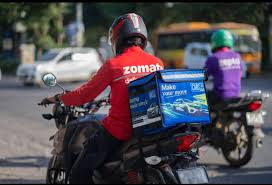
The Indus Zone Tech Desk | India’s leading food delivery platform Zomato, has started testing an innovative advertising concept — transforming delivery bags into moving ad spaces. The company has partnered with CARS24 to launch a pilot project in Bengaluru, potentially unlocking a new source of income while enhancing brand visibility across India’s busiest city streets.
India’s leading food delivery platform, Zomato, has started testing an innovative advertising concept — transforming delivery bags into moving ad spaces. The company has partnered with CARS24 to launch a pilot project in Bengaluru, potentially unlocking a new source of income while enhancing brand visibility across India’s busiest city streets.
The initiative marks a significant shift in Zomato’s business strategy as it explores ways to monetize its delivery fleet beyond food orders. With hundreds of thousands of delivery riders crisscrossing urban areas daily, the food-tech major is now turning those distinctive red bags into prime real estate for advertising.
The Collaboration Between Zomato and CARS24
The partnership was publicly confirmed by Prachi Sharma, Head of Content and Creative Communication at CARS24, through a LinkedIn post on Friday. Describing the campaign as a marketing experiment, Sharma said the collaboration aims to explore how “everyday objects can double up as brand surfaces.”
“This is an experiment. We are testing it for now and will be learning soon,” Sharma wrote. “This time, it’s the delivery bag. Next time, it could be something entirely different.”
According to her post, thousands of Zomato riders in Bengaluru have already been included in the pilot phase. The campaign’s idea is to “take the brand where the city already moves,” suggesting that the initiative blends naturally with Zomato’s existing presence on city roads.
Zomato’s Move Toward Creative Monetization
This experimental campaign was first reported by IndianStartupNews on September 23, 2025, when it revealed that Zomato was exploring ways to monetize delivery assets — including riders’ uniforms and delivery bags — by turning them into advertising platforms.
The concept aligns with Zomato’s broader strategy to diversify its revenue streams. As competition in the food and quick-commerce sectors intensifies, the company is seeking new methods to generate additional income while supporting its delivery partners.
Zomato currently boasts a delivery network of over 509,000 partners who together complete around 2.5 million food orders per day. Its quick commerce arm, Blinkit, handles an additional 2.2 million deliveries daily, giving Zomato access to a combined 4.7 million potential ad impressions every day — all through its existing infrastructure.
A Win-Win for Brands, Riders, and the Platform
If the Bengaluru pilot proves successful, Zomato’s delivery fleet could become one of India’s largest moving outdoor advertising networks. For advertisers like CARS24, it presents an opportunity to reach millions of consumers in high-traffic areas with hyperlocal visibility.
From Zomato’s perspective, this strategy has threefold benefits:
- New revenue generation — Monetizing delivery bags and uniforms could help offset operational costs and improve margins.
- Rider incentives — The company could share a portion of ad revenue with delivery partners, adding an additional income stream.
- Brand partnerships — Collaborations like this could pave the way for long-term tie-ups with major brands, turning Zomato into a key player in India’s out-of-home (OOH) ad ecosystem.
Experts suggest that by integrating advertising into its logistics framework, Zomato could also strengthen its relationship with partner brands across multiple industries, from automobiles to fintech and consumer goods.
A Marketing Innovation Inspired by Everyday Life
The partnership with CARS24 demonstrates how creative marketing can reimagine everyday touchpoints. In India’s crowded urban landscapes, traditional advertising such as billboards and posters often compete for attention. Mobile, eye-level ads on delivery bags could help brands reach audiences more organically, especially during peak meal times and traffic hours.
Marketing professionals view this as an example of “ambient advertising”, where brands integrate messages into the consumer’s surroundings naturally. As Zomato riders travel across diverse neighborhoods, they effectively serve as brand ambassadors, delivering not just meals — but messages.
CARS24’s involvement also reflects the company’s digitally savvy and experimental marketing approach, which has previously included creative social media campaigns and influencer collaborations.
India’s leading food delivery platform Zomato
Globally, several food delivery and ride-hailing companies have experimented with turning fleets into ad channels. For instance, platforms like Uber and DoorDash have explored in-car and delivery bag advertisements as alternative income models.
Zomato’s move positions it as a pioneer in India’s gig-based advertising ecosystem, especially at a time when businesses are increasingly focused on cost optimization and diversified monetization.
Given its vast fleet and extensive coverage across metro cities, Zomato’s pilot could signal a new trend in performance-driven OOH advertising, combining mobility with technology to offer measurable visibility for brands.
Potential Impact on India’s AdTech and Gig Economy
If scaled nationwide, this model could reshape urban advertising while directly benefiting gig workers. By earning commissions from ad partnerships, delivery partners could enjoy supplementary income, enhancing retention and satisfaction in the gig workforce.
For Zomato, the advertising model could become a sustainable revenue stream that doesn’t rely solely on order volumes or commissions. The company’s previous experiments — such as in-app promotions and sponsored listings — have already demonstrated its ability to blend advertising with consumer experience.
Ad industry analysts predict that Zomato’s move could inspire Swiggy, Zepto, and Dunzo to explore similar partnerships in the near future, setting off a new wave of innovation in India’s AdTech-meets-logistics space.
The Road Ahead: Scaling the Pilot Beyond Bengaluru
While the initiative is currently limited to Bengaluru, sources suggest that Zomato is closely monitoring performance metrics such as brand visibility, audience impressions, and rider feedback. If the campaign shows strong results, it may soon expand to other major metros like Delhi-NCR, Mumbai, and Hyderabad.
The real test will lie in measuring how effective these on-the-go ad placements are in driving brand recall and engagement compared to digital ads. For CARS24, the pilot represents a step toward experiential, high-visibility marketing that moves beyond online impressions.
As for Zomato, the pilot underscores the company’s ability to think beyond food delivery — tapping into its massive mobility network as a media platform in motion.
Conclusion
Zomato’s experiment with CARS24 is more than just a creative campaign — it’s a glimpse into the future of urban advertising. By turning delivery bags into ad spaces, the company is effectively merging logistics, branding, and technology into one scalable business model.
If successful, this could set a precedent for how gig-economy platforms in India leverage their operational assets for growth. For now, all eyes are on Bengaluru — where red Zomato bags are carrying more than just meals; they’re carrying the next big idea in advertising.